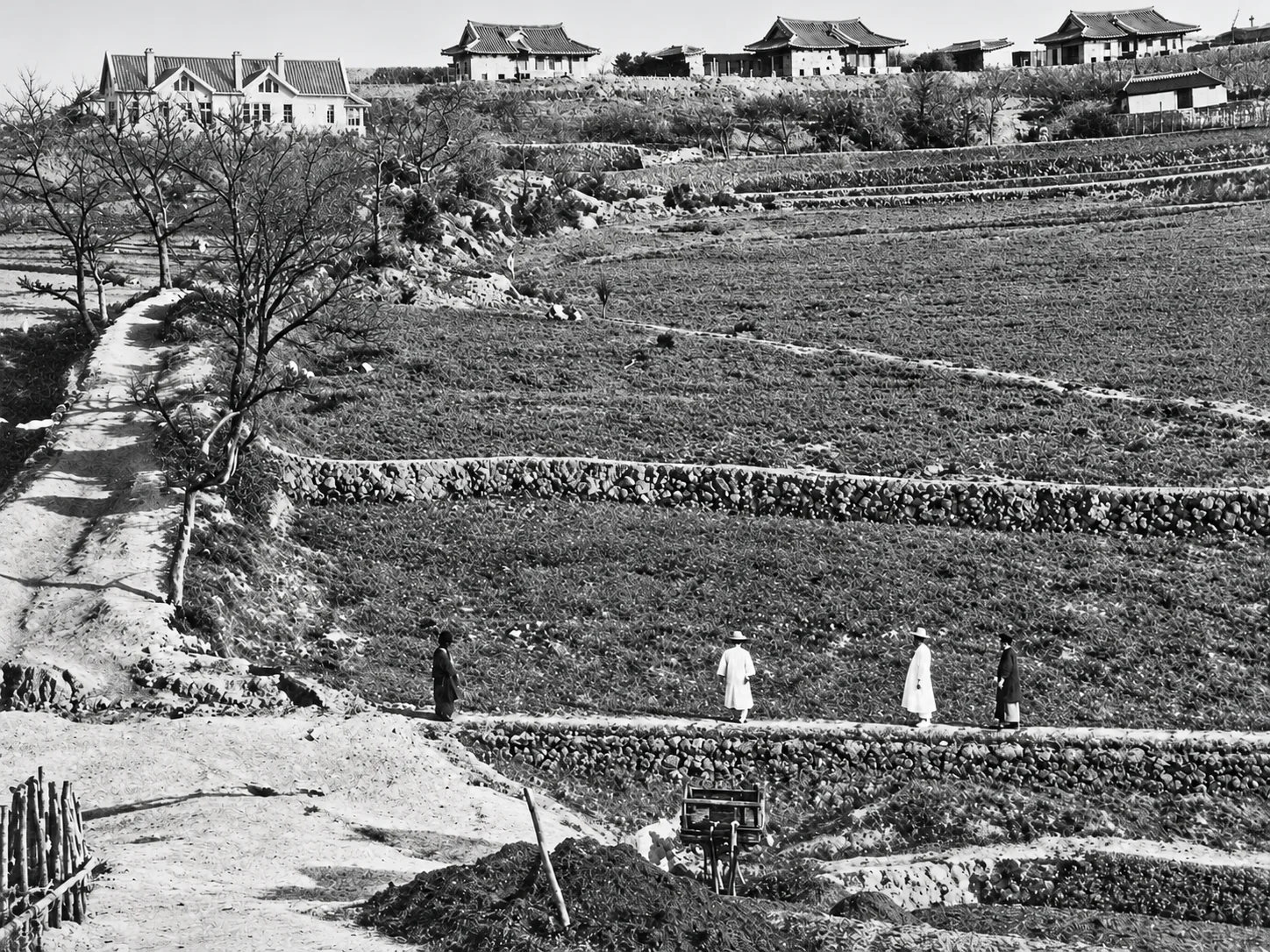
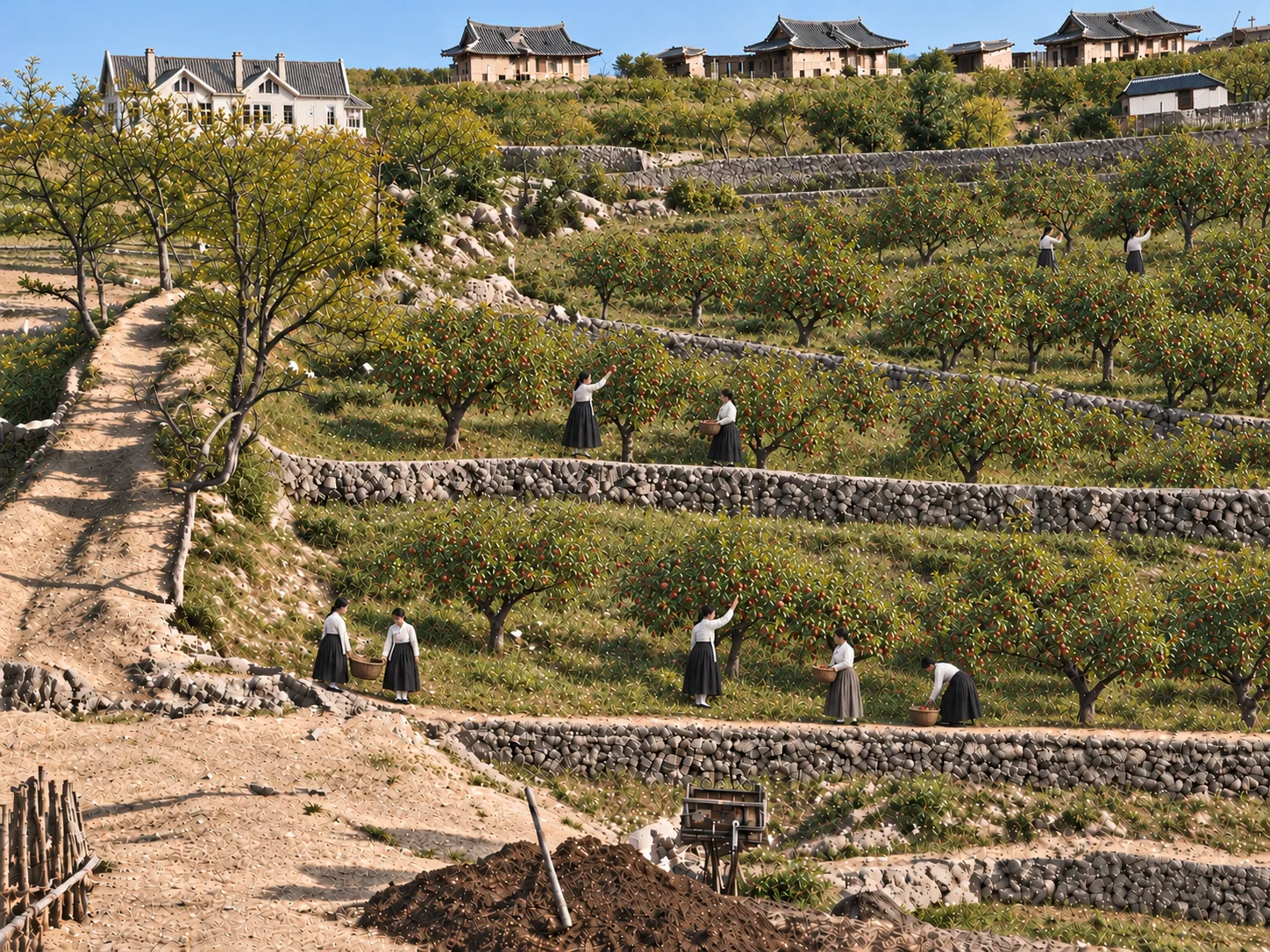
In 1899 a medical missionary planted 72 apple trees on Cheongna Hill in Daegu, Korea. Korpple carries that heritage forward with 100% Gyeongbuk apples.
Korea was enduring a severe famine. In December, medical missionary Dr. Woodbridge O. Johnson arrived in Daegu and began caring for patients at Jejungwon, the forerunner of today's Dongsan Hospital.
He ordered apple trees from Missouri. Carried by train, steamship, ferry, riverboat and cart, the saplings reached Daegu two to three months later. Seventy-two trees of three varieties were planted on Cheongna Hill, and their fruit, which kept for months, was shared with patients.
Students of Sinmyeong Girls' School learned to graft apple trees and carried the skill back to their home villages during school holidays.
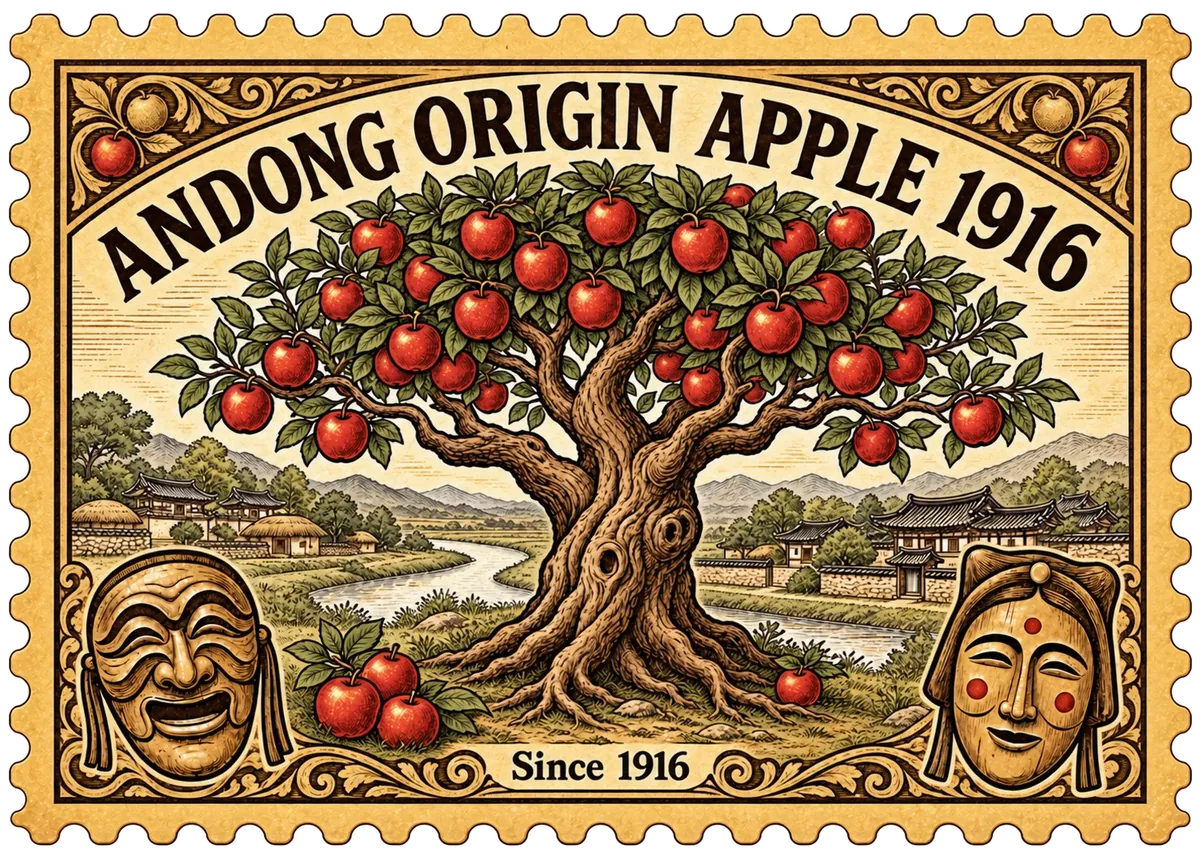
Missionary John Crothers planted 100 apple trees in the field of Nokjeon Church in Andong. This was the beginning of Andong apples.
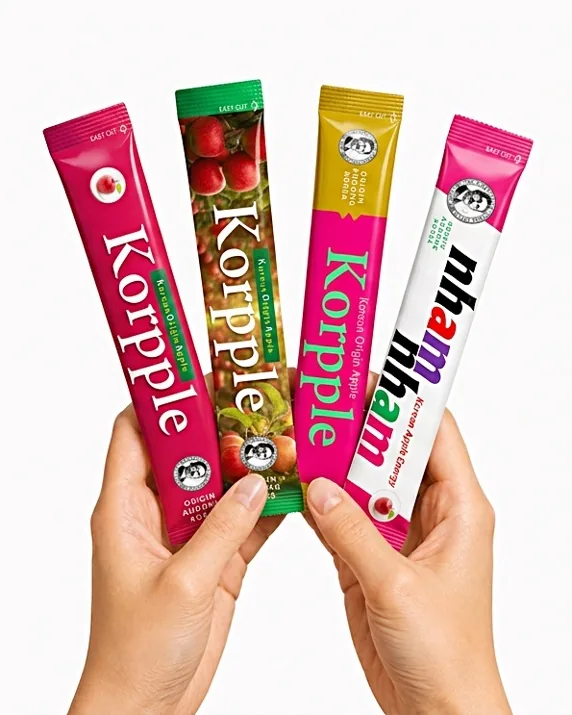
Korpple — Korea plus Apple — rescues apples that fall in storms and hail and turns the whole fruit, peel and all, into a liquid apple stick.
Coming soon
Hwalryeok Stick
A liquid apple stick made from 100% Gyeongbuk apples, peel and all, produced in Andong at the Gyeongbuk Institute for Bio Industry.
Andong Origin Apple, since 1916
Andong means ‘the peaceful land of the east’. Korpple is made from the apples of this land.
Opening soon
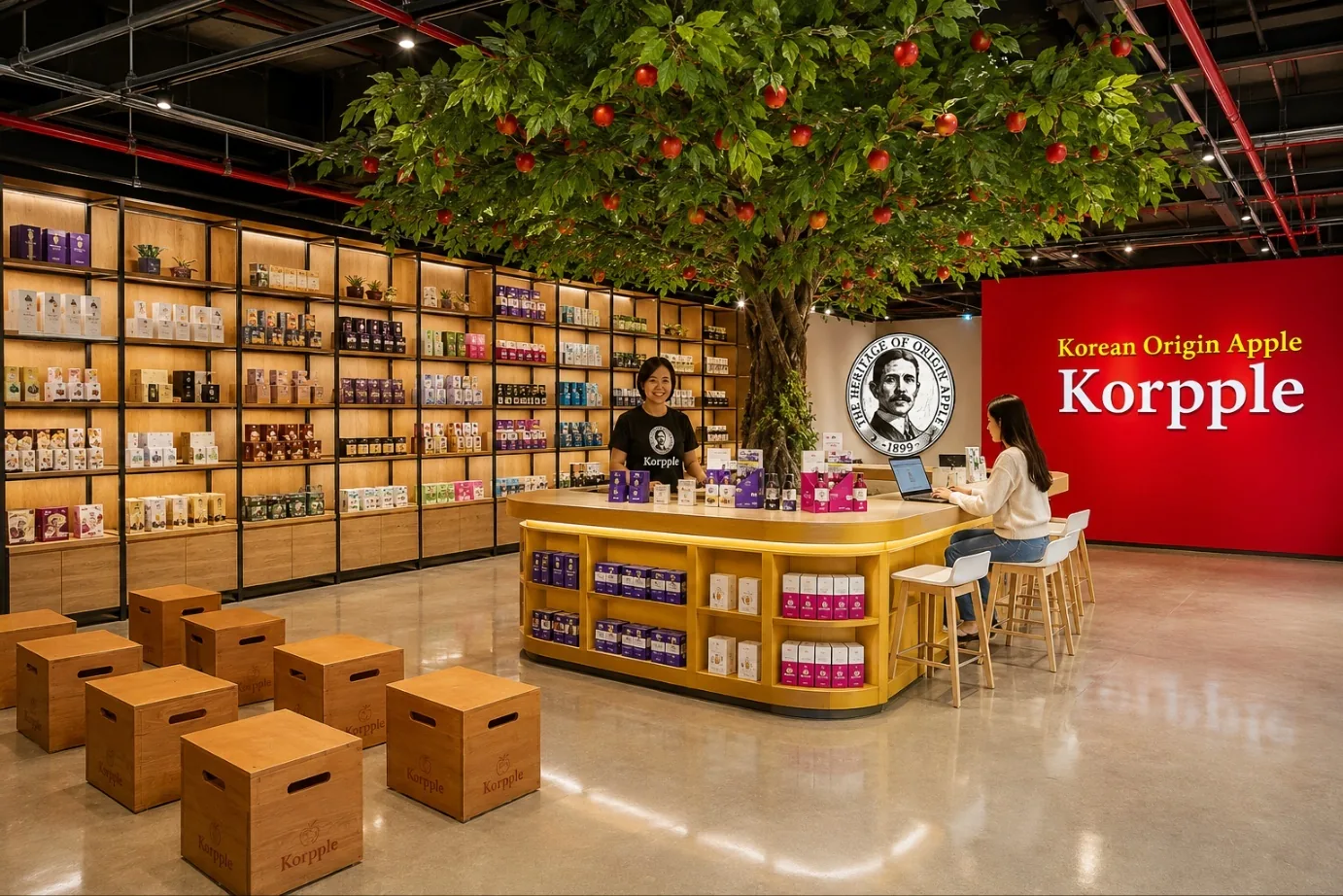
A store with an apple tree at its heart
We are preparing a store in Daegu where travellers can watch the story of Cheongna Hill, taste Korpple and choose gifts made from Gyeongbuk apples.
Contact
For partnerships, press or Cambodia cooperation, send us a message.